
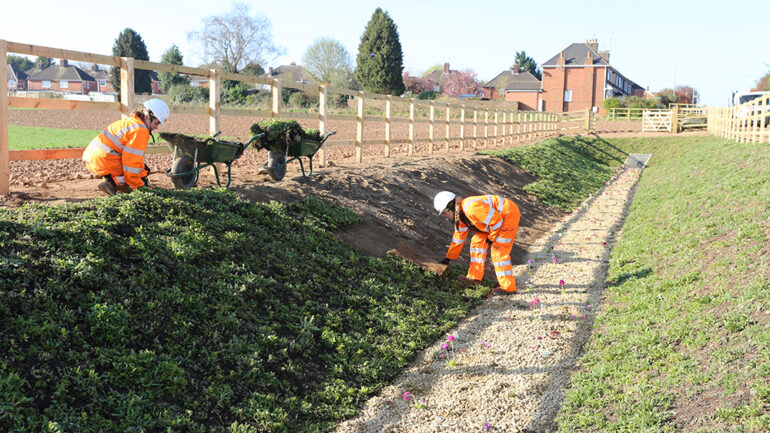
Managing rainfall where it lands is increasingly important as towns and cities seek to reduce flood risk and pressure on drainage networks. In Mansfield, Severn Trent Water chose nature-based solutions and sustainable urban drainage systems (SuDS) as part of its response.
Unlike conventional drainage, planted SuDS can slow and store rainfall, filter pollutants and improve water quality while creating greener urban spaces. Engineered soils and planting systems can also capture pollutants washed from roads, such as hydrocarbons, heavy metals and sediments. This helps prevent them from reaching rivers and downstream ecosystems.
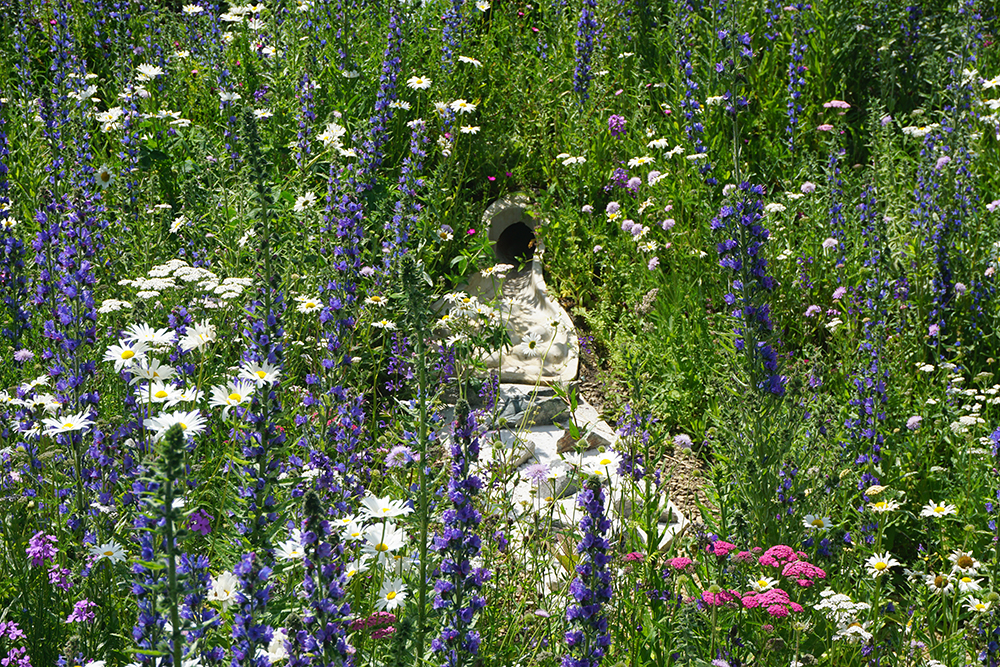
The Mansfield scheme incorporates bioswales, detention basins and rain gardens, showing how water infrastructure can also support biodiversity and climate resilience.
An Integrated Approach
The Green Estate CIC worked collaboratively with Severn Trent Water, Galliford Try, Kier, SISK and Ground Control to deliver a solution able to manage over 58 million litres of water, significantly alleviating flood risk.
The performance of planted SuDS depends on more than drainage design alone. Growing media, plant communities, installation, establishment and long-term management must work together to deliver hydraulic, ecological and landscape performance.
The Green Estate installed its specialist Grey to Green Substrate®, engineered to civil engineering standards, with over 25,000 sqm of Pictorial Meadows Turf® and specialist plants across more than 200 SuDS features.
Designed for Performance and Pace
Pictorial Meadows SuDS Turf® combines species proven to thrive together, creating resilient plant communities that support biodiversity. Pre-grown on peat-free, 100% biodegradable mats, it allows diverse planting to be installed rapidly where construction programmes and seasonal planting windows are tight.
With up to 150 plants per sqm and installation rates of up to 1,000 sqm per day, as many as 150,000 established plants can be delivered and laid in a single day.
Beyond Flood Resilience
The scheme has significantly reduced surface water entering the drainage network, reducing flood risk to over 90,000 residents.
It is also creating more biodiverse and attractive public spaces, supporting pollinators, urban cooling, air quality and community wellbeing. Planted SuDS provide passive pollution control by treating runoff before it reaches watercourses, while greener streets can encourage footfall and support the local economy.
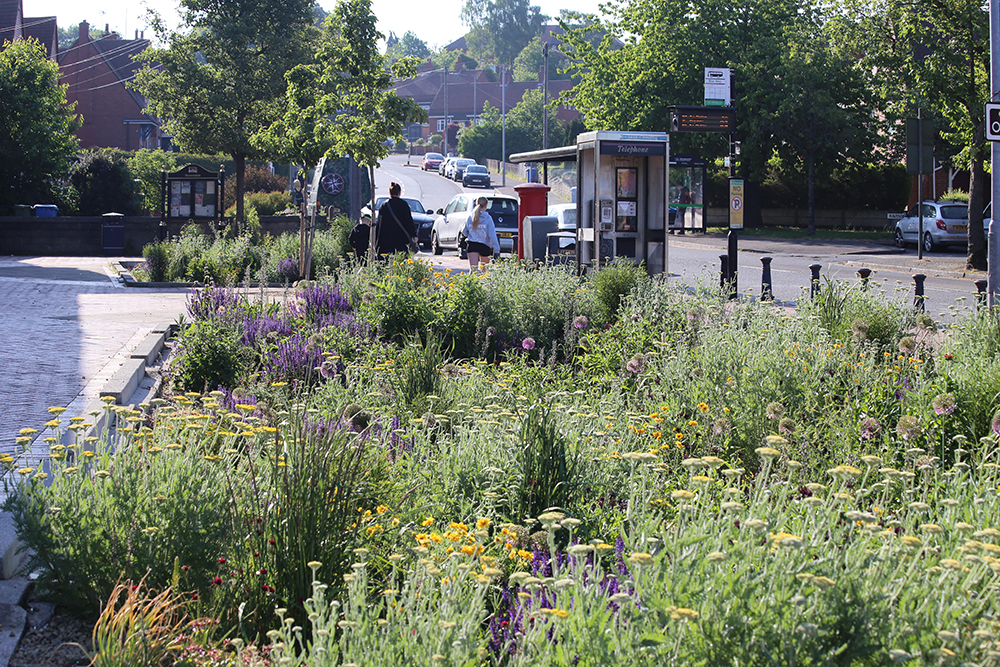
Mansfield’s historic marketplace has been revitalised with vibrant rain gardens, demonstrating how SuDS can combine water management, pollutant removal, resilient planting and long-term landscape performance.

