
When most people think of gabions, they picture heavy-duty engineering projects such as rock cages lining highways or holding back slopes. But in modern landscape design, these wire baskets have broken free from their industrial roots.
Think of gabion baskets as building blocks for landscapers and gardening enthusiasts. They offer urban texture and structural integrity that balances modern design with the natural world. If you want to update your outdoor space, here are some lesser-known ways to incorporate gabions into your landscaping projects.
Curved Seating Areas
When most people design garden seating, they usually go for straight lines and sharp 90-degree corners. While functional, straight lines can sometimes feel rigid. If you want a more natural flow in your garden, consider a curved bench or fire pit surround.
Many people assume wire cages can only form straight boxes, but creating a curve is straightforward. By placing smaller-width gabion baskets at slight angles to one another, you can form fluid curves, circular benches, or winding garden walls.
For a complete step-by-step breakdown on how to do this, check out this guide.
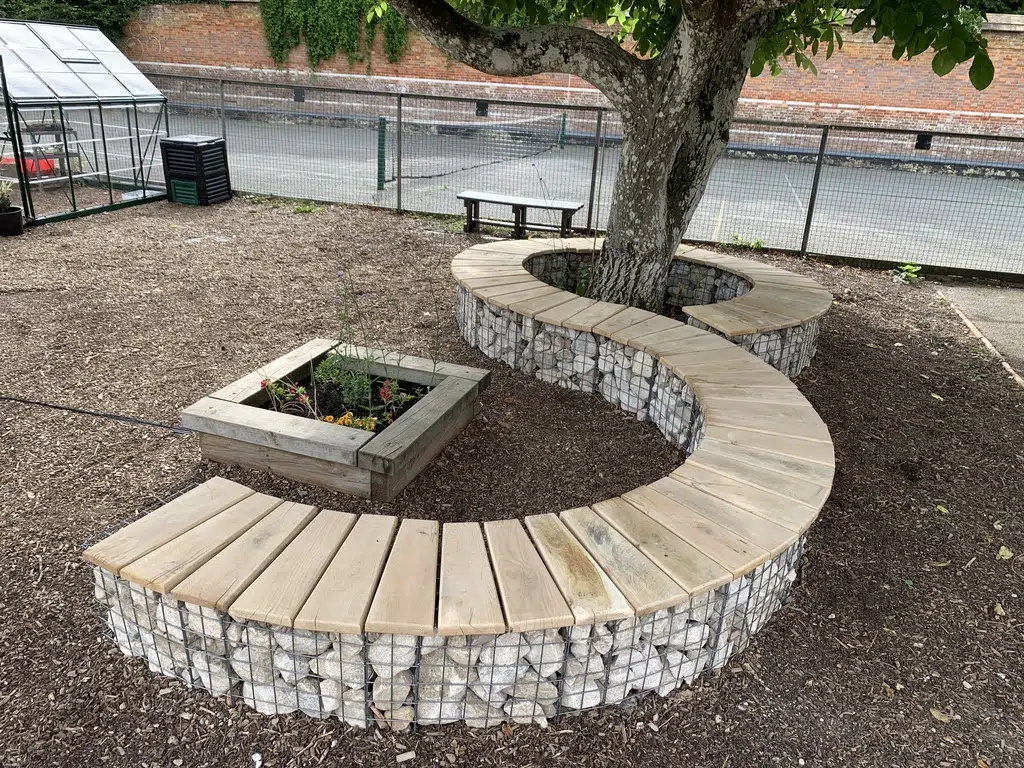
Design Inspiration: In this installation, a series of short, angled gabion baskets filled with white stones form a winding S-shaped bench. Built around the base of a mature tree, the structure is finished with a contoured timber slatted seat. It provides ample shaded communal seating while working with the existing landscape.
Outdoor Kitchen and BBQ Stations
Why use a standard, off-the-shelf wobbly barbecue cart when you can build a solid, custom outdoor cooking station? One of the main advantages of gabion baskets is their modular versatility. Assembling them is a lot like working with landscaping LEGO.
As long as your installation sits on solid, level ground and the height of your structure does not exceed double its width, you can configure them into almost any shape you need.

Design Inspiration: This design uses gabion pillars filled with smooth, grey cobbles to form a U-shaped kitchen island. Installed directly on top of a timber deck, the baskets support a solid wood countertop and house a built-in stainless steel gas grill. It combines industrial mesh, stone, and timber for a clean, functional cooking zone.
Outdoor Shelters and Garden Rooms
If you have some DIY experience, gabions can scale up into larger architectural features. Because rock-filled baskets provide excellent weight and stability, they make strong anchors for carpentry projects.
By attaching structural timber posts and adding corrugated roofing sheets, you can create shaded pergolas, outdoor workspaces, or garden rooms that are shielded from the elements.
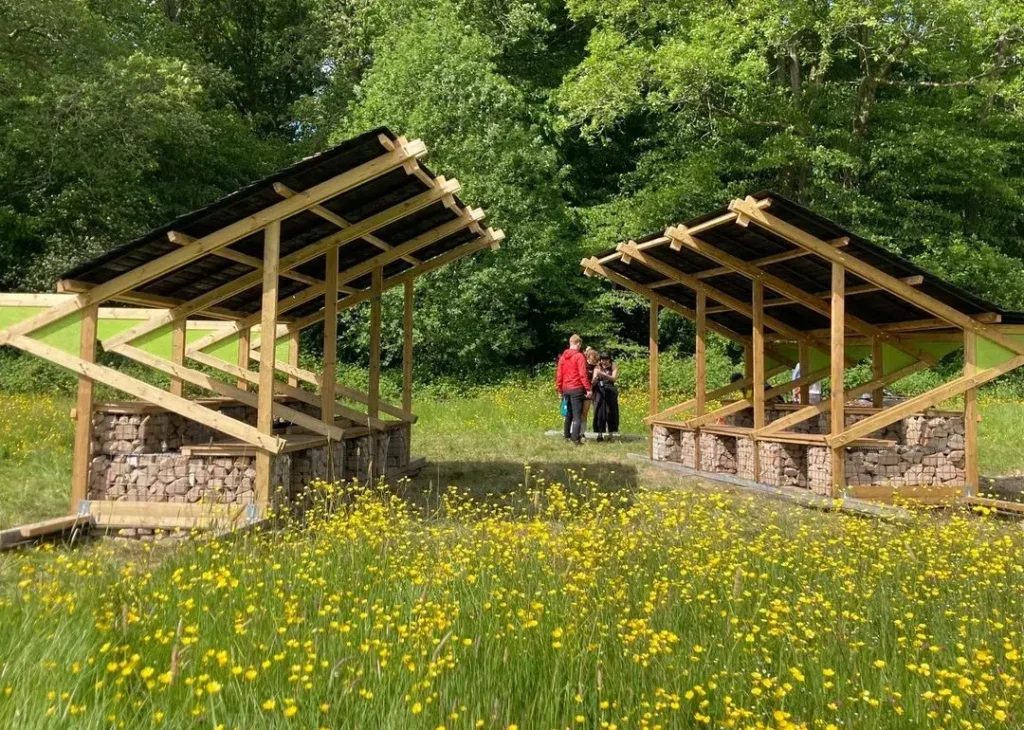
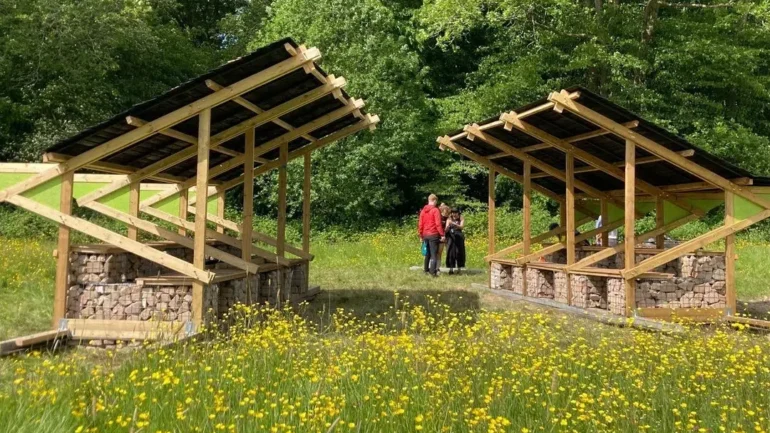
Design Inspiration: This outdoor classroom uses gabion stone-filled baskets to anchor a timber frame and a corrugated slanted roof. This type of structure shows how gabions can act as the foundation for functional outdoor spaces.
Get Creative: Filling the Gabion
One of the most flexible parts of gabion design is choosing what goes inside the wire.
If your gabion is decorative and isn’t being used as a structural retaining wall to hold back tons of soil, you can fill it with almost anything. At the end of the day, they are just durable metal cages with a lot of empty space inside.
While gabion stone is the standard choice, people regularly fill their baskets with:
- Logs, terracotta pipes, and stacked timber rounds.
- Recycled glass bottles or crushed masonry.
- Vegetation, soil pockets, and mosses.
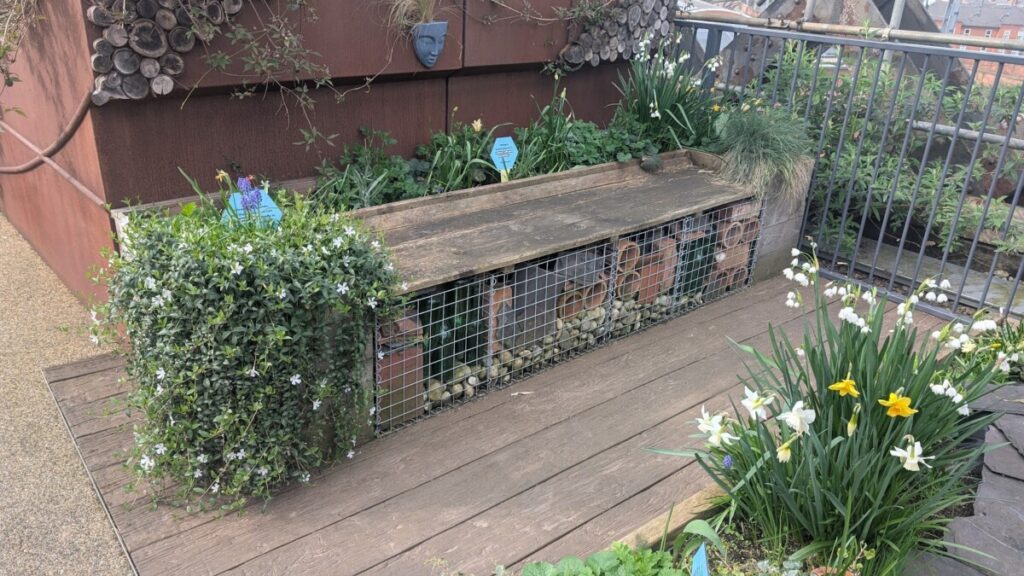
Design inspiration: An example of this can be found at the Castlefield Viaduct sky park in Manchester. In this urban green space, a garden bench uses a gabion base filled with a mix of recycled terracotta drainage pipes, slate segments, old brick pieces, and smooth pebbles. Placed next to planters and climbing flowers, it serves as an interesting feature while doubling as a habitat for local wildlife and a seating area.
Foundations for Public Art
Because of their distinct look, stability, and various filling options, gabions are also used in public and private art installations where a heavy, stable anchor is required to secure a sculpture.
Rather than trying to hide the base of an installation, modern designs often leave it exposed, making the gabion foundation an intentional part of the display.
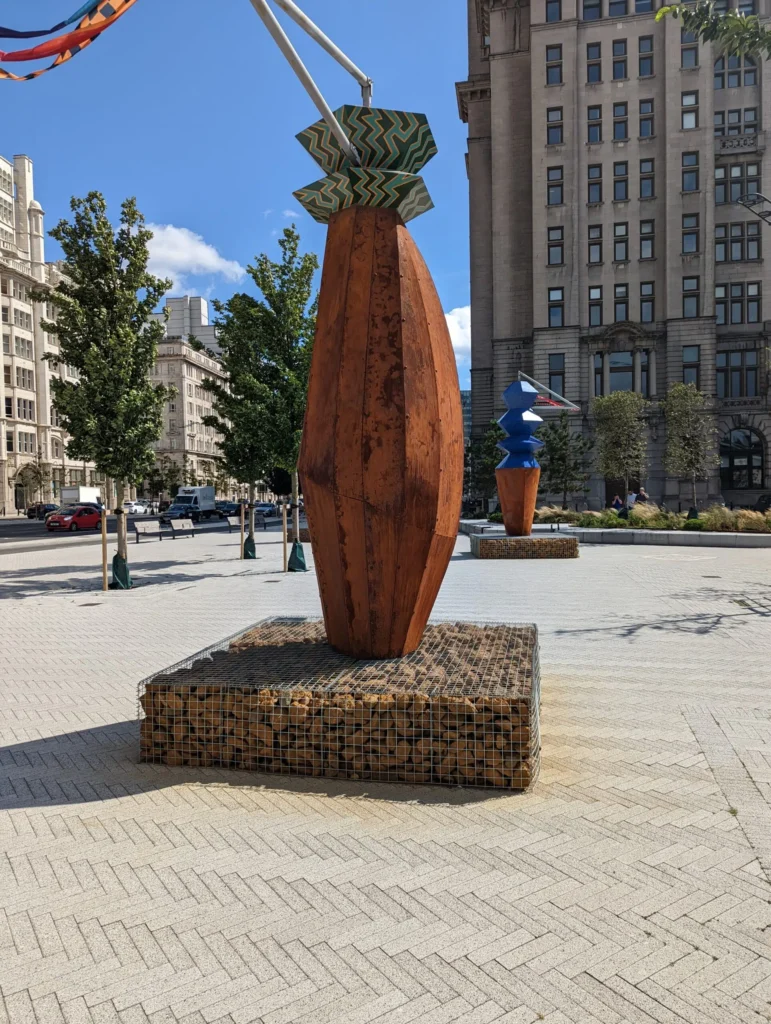
Art Installation Spotlight: An example of this is located on the Liverpool waterfront: The Merseyside Totemy sculptures by artist Alicja Biala are a collection of public artworks located outside the Royal Liver Building. To secure the totems against the windy waterfront, the artist used low, wide gabion platforms packed with uniform brown stones. The industrial mesh and earth-toned rocks provide a stable, grounded counterweight to the shapes and colors of the sculptures above.
Whether you want to build a cooking island, a winding bench, or a backyard feature, gabions offer the structure, durability, and flexibility to complete your project. Remember, gabions are just landscaping LEGO bricks, so get creative.

