Drawing on Bradstone’s latest Promoting Safety in the Public Realm whitepaper, Iwona Kossek, director of Ask for Angela, with Jo Roberts, head of product management at Bradstone and Holcim UK, explore how to make smarter lighting choices in public spaces.
As cities seek to create more inclusive, walkable and vibrant public spaces, lighting is increasingly being recognised as a critical component of urban design. And for good reason.
Three-fifths of people feel unsafe in a park or open space after dark, 24% of men and 37% of women stop walking in quiet places such as parks or open spaces after dark due to safety concerns, and people feel less safe walking alone in all settings after dark than during the day, with women feeling less safe than men.[1]
But improving safety is not as straightforward as installing more streetlights. Instead, lighting can be used as a powerful tool in creating inclusive, inviting spaces, when choices are paired with strategic thinking.
Putting the nuance into safety
Safety in the public realm refers to the collective protection and wellbeing of people using shared spaces, such as streets, squares, parks, transport and town centres.
To understand safety, we must first understand risk, which expands beyond ‘actual’ threats, e.g. crime, violence and accidents, and includes ‘perceived’ threats- which may prevent or change the behaviours of people using public infrastructure and participating in public life.
When exploring possible interventions to these actual or perceived threats, the measures on hand usually fall into two groups: physical and social. Physical measures emerge through placemaking, design, maintenance, surveillance and lighting. Social measures looks like the presence of others, community cohesion activity and space management.
When looking at safety, there is a similar distinction as seen in risk. First is actual safety, which refers to an objective level of risk, supported by data such as accident rates and crime statistics. Though, this data should not be relied on for a complete picture for the safety of an area, as certain crimes are known to be underreported, such as sexual harassment and sexual violence. This is why we need to also consider perceived safety, the subjective determination of risk shaped by emotions, past experiences and social contexts.
Actual and perceived safety are important considerations to balance, with the latter shaping behaviour more than the former. Lighting is a crucial element in improving both in public spaces. However, to get the most out of light, we must unpack its misconceptions.
Misunderstandings when it comes to light
There’s a longstanding misconception when it comes to light: more light equals increased safety. However, this simple conclusion is not applicable to every scenario.
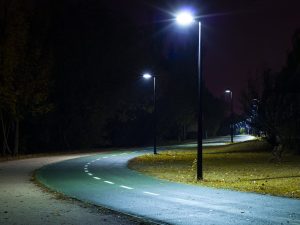
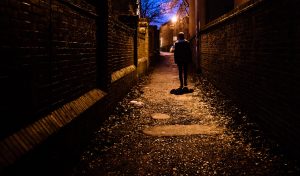
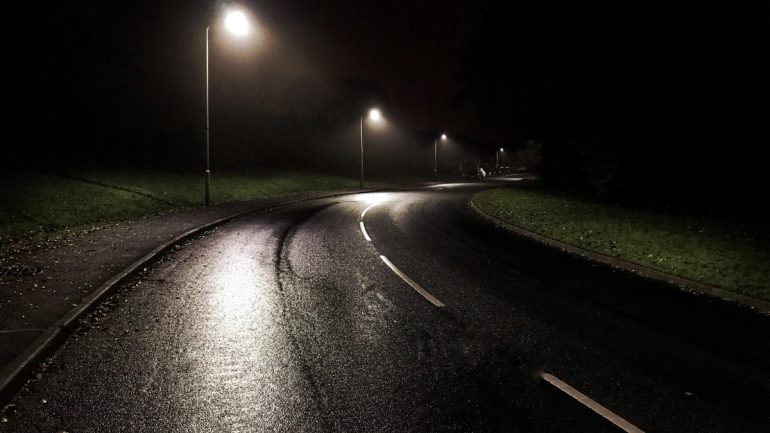
For example, increasing harsh lighting in an area may have the opposite effect by casting long shadows, making it hard to navigate spaces in the evening. There are also the negative effects to biodiversity and local wildlife that brighter, colder light may cause too. Other pitfalls of poor lighting include inadequate illumination in long, enclosed paths, creating blind corners. Conversely, over-lighting or poorly targeted illumination creates unnecessary visual clutter.
Lighting, and other design elements pertaining to public safety, have usually adhered to an outdated linear, single-earner model. Meaning, urban spaces have been structured for one member of a household travelled to and from work while others’ movements were largely invisible in design decisions.
But when designing for today’s society, multi-purpose, dynamic spaces are the current norm, meaning several people from the same household may be commuting, as well as combining trips such as school drop-offs, shopping and care responsibilities within the same journey.
Good design principles
So, what does good lighting design look like? This depends on the space, how the space is being used and who the frequent users of the space are. Lighting in an enclosed park will look different to a town centre. It might be more helpful to ask what space good lighting design should help to create.
Lighting should help create an open and elevated space to encourage a sense of security as they can see and plan their route ahead. Enhancing the opportunity for passive surveillance should be another consideration. The concept of ‘eyes on the street’ has been used for some time, allowing for natural oversight provided by residents and pedestrians. This can be achieved by prioritising clear sightlines and intelligent use of lighting and interventions to activate spaces.
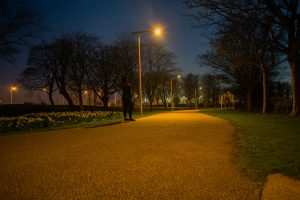
Something lighting can do quite well is indicate a safe space that can be occupied, not just by passers-by or dominant groups, but by a diverse range of users. Warm lighting, due to it being less harsh on the human eyes, can help create a comfortable setting, while a cooler light can be used for areas that require better clarity and recognition.
Smarter choices for safer streets
Getting lighting right within our public spaces is one of the many ways we can improve the physical and psychological wellbeing of our communities. Making everyday movement, access to green space and participation in public life more feasible and safer for more people is something that should be a serious design consideration.
Lighting sits at an important intersection. Its role can and should expand to be more than illumination, but actively curating open and inviting spaces, that allow people to enjoy public places and travel safely to their destinations.
To find out more about how urban design and safety can align in public spaces, read the whitepaper Promoting Safety in the Public Realm, here:
www.bradstone.com
[1] Perceptions of personal safety and experiences of harassment, Great Britain – Office for National Statistics