
By Jack Tolley-Smyth, lighting expert at home and garden lighting brand 4lite
Exterior lighting used to be purely practical, a floodlight for security or perhaps a modest porch light. Today, modern homes demand a far more thoughtful approach.
Homeowners increasingly want outdoor lighting that combines practicality with atmosphere. And for a very good reason.
While illumination is usually the primary purpose of exterior lighting, it is closely followed by its ability to transform outdoor spaces with stunning aesthetics which extend evening living, create an inviting atmosphere and enhance a home’s kerb appeal.
The most common mistake with outdoor lighting is failing to plan ahead, treating it as an ‘add-on’ rather than recognising its potential. When integrated into the design from day one, a well-executed scheme can deliver exceptional results and elevate the entire project.
The best approach is to plan out a layered lighting scheme that combines various light sources, allowing them to work together or independently, offering complete flexibility to tailor the space for different purposes.
A layered lighting scheme generally incorporates three elements: ambient lighting, task lighting and accent (or decorative) lighting. In a garden setting, safety lighting should also be considered.
Ambient lighting forms the base layer, gently illuminating key areas including patios, driveways and pathways. The key is striking a balance: providing enough brightness to navigate safely without becoming overbearing.
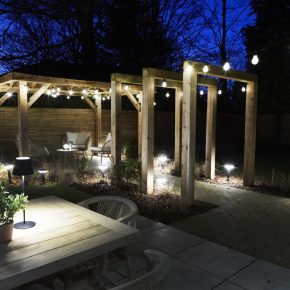
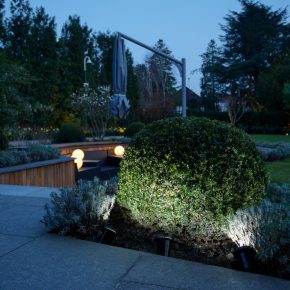
This layer can feature wall lights, path lights and overhead festoon lighting. You can also use uplighters positioned to project light onto garden boundaries, such as walls, fences, trees or mature hedges. This helps eliminate dark spots and harsh shadows while opening up the space visually and making the garden feel significantly larger.
The second layer is task lighting, which provides practical illumination where needed after dark, adapting to how and when the garden is used. Common zones include outdoor kitchens and bars, barbecue areas, alfresco dining spaces, bin stores and reading nooks. Directional wall-mounted lights are ideal for task lighting, as are spotlights and LED strip lights.
When it comes to colour temperature, cool white light works well as it delivers crisp illumination and highlighting details in a way that closely mimics natural daylight.
Accent lighting is the creative layer that sets a garden lighting scheme apart. This is where you can define a garden’s character and style, using targeted light to create a space that feels warm, inviting and sophisticated.
With accent lighting, the fixture itself can make a design statement, but the effect of the light it creates is most important. Good lighting transforms an outdoor space after dark.
This layer allows you to accentuate key garden features, create new focal points and generate visually striking effects. Start by assessing the space to identify opportunities. Use spike lights or ground fittings to project light upwards onto trees, plants, water features and any other visual points of interest, such as textured walls.
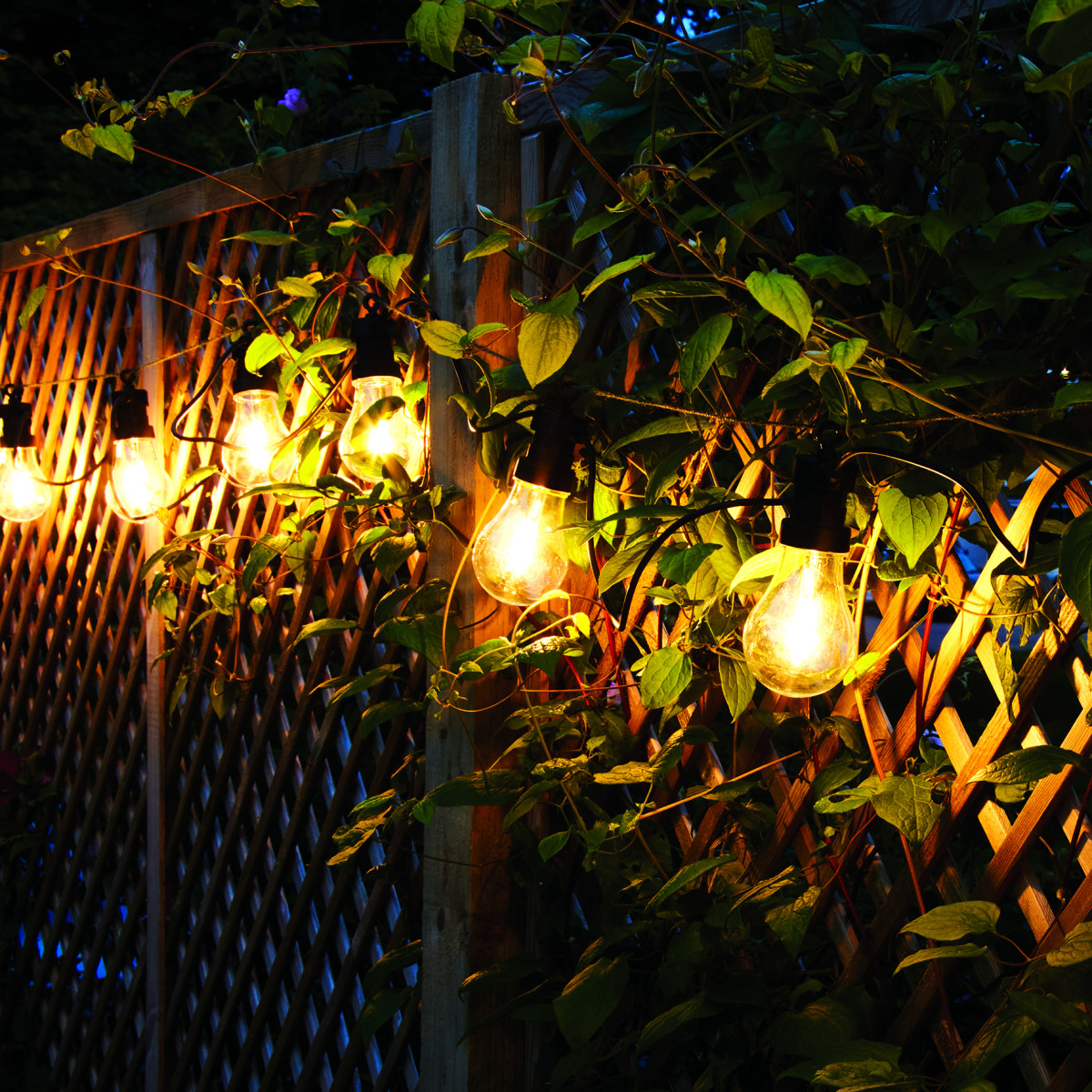
Festoon lights create a delicate, charming atmosphere, while outdoor LED strip lighting tucked under steps, wall coping, outdoor kitchen counters and built-in bench seating creates a subtle glow that adds depth, highlights lines and gives a visual ‘floating’ effect. You can also incorporate wall lanterns, portable lanterns and decorative wall lights to complete the design.

Warm tones are best for decorative and ambient lighting. In contrast to cool white light, warm white light produces a welcoming, cosy glow that softens edges and is much gentler on the eyes.
The final layer to incorporate into a garden lighting design is safety lighting. Here, you can plot wayfinding routes to guide people around the garden and the exterior of the home, ensuring that steps, changes in level, hazards, gates, paths and entrances are adequately illuminated.
There are several product options to achieve this, from path lights, bollards and spike lights to recessed lights, step lights, LED strip lighting, spotlights and festoons. Position these fittings to illuminate the ground and guide people safely along the route.
Ultimately, a successful garden lighting scheme is about more than visibility. It’s about creating atmosphere and ensuring the space feels cohesive and considered after the sun sets. It is this attention to detail that can transform a garden into a stunning space and a true extension of the home.

Always consult a qualified electrician to ensure your outdoor lighting is suitable for its location and exposure to the elements.
