
As winter drifts into spring and the landscaping season rolls around, many homeowners start eyeing up their gardens to see what could be improved. Perhaps it’s finally time to re-lay that patio, to spruce up the driveway, or to sort out the perennial muddy patch in the garden.
In 2026, though, landscaping is more than what meets the eye. It might not be as obvious, but if you want an outside space that holds up well, it’s best to consider what’s beneath the surface. And the secret to reinforcing what’s underneath might be a word you’ve never heard of – geopaving – according to the head of geosynthetics sales, David Fisher, at Geoworks.
The outdoor living boom
We Brits came out of the Covid-19 pandemic having rediscovered our gardens. A £6.5 billion boom in garden retail has seen sales soar by 25%, as homeowners pour their attention, and spending, into outdoor living. Patios, pergolas and fire pits have all had their moment – but now the attention has shifted to making our outdoor spaces sustainable.
British weather is becoming more unpredictable and many budgets have tightened. Given those circumstances, how can we make sure that the outdoor of our properties stay in a healthy state?
The answer is to look at geosynthetics. These are tough plastic sheets, grids, or fabrics that sit under soil or gravel, helping to keep the ground stable and stop surfaces from moving or sinking. Many also let rainwater drain through, which helps reduce puddles and runoff.
Until recently they’ve mainly been used in big industrial or commercial applications. But increasingly manufacturers are realising that gardeners and DIY-bods find them useful too –and have been pitching their products accordingly. But what can geosynthetics actually do for you? Let’s look into one of these products – geopaving.
Gravel that stays put
Gravel can make for an everlasting battle. One of the frustrations with gravel drives or paths is making sure everything stays in place – without a stable base gravel tends to scatter, forming ruts and bare spots, as well headaches for anyone who values a neat appearance.
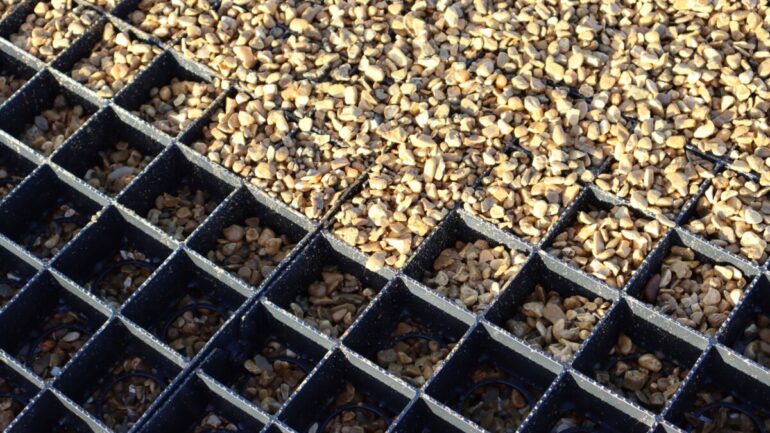
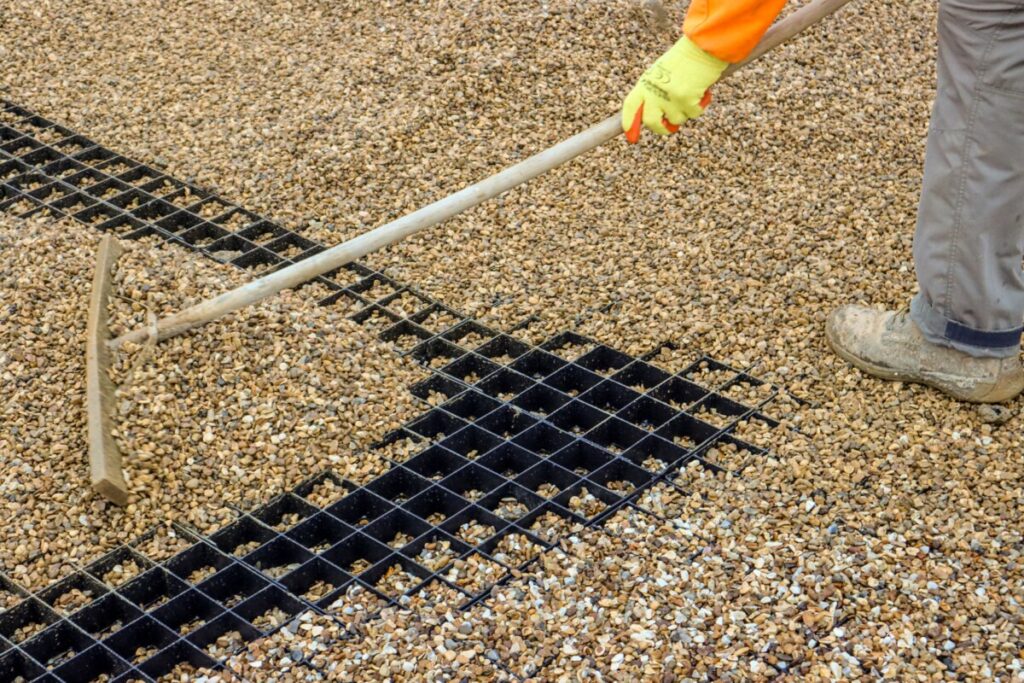
Geopaving is built to help – it’s a modular plastic grid designed to stabilise gravel or soil. When it’s locked together in a square structure, it provides strength and structure without being an eyesore.
For gravel that means much less raking, topping up, or sweeping stray stones back into place. Once filled and settled, it’s virtually invisible, leaving only a neat and natural surface.
When filling gravel into the geopaving, one top tip is to overfill by about 10 to 20mm. This hides the grid beneath and compensates for the natural settling that occurs with footfall or tyre pressure.
Strength below the surface
You might not expect plastic panels to get your heart racing, but under the surface, geopaving performs several quiet miracles. It can act to divide soil from gravel – to prevent sinking or rutting, or to help weak ground support heavy loads. While it does this it allows water to drain naturally, filtering out fine particles that could otherwise cause clogs.
Geopaving panels also act as a protective layer, shielding landscaping investment from erosion, wear, and compaction. For gardens on a slope, they can even help prevent soil from washing away in heavy rain. Think of it as a structural insurance policy that’ll set outdoor space up for the future.
Braced for the British weather
If there’s one thing our gardeners can bank on in the future, it’s the rain. As it merrily pours down, we might remember that much of the UK’s urban landscape is sealed under tarmac and concrete. These materials can block natural drainage – putting a strain on our largely-Victorian sewage system.
Thankfully, geopaving is compliant with sustainable urban drainage systems, otherwise know as SuDS. In simple terms, the panels allow rainwater to soak naturally back into the ground rather than running off into sewers. This is tremendous for the long-term health of garden soil, and on a wider scale it reduces the risk of flash flooding in the area.
So, opting for geosynthetics at home might make a modest but meaningful contribution to tackling our infrastructure’s challenges.
Easy for DIYers, trusted by pros
While geosynthetics have traditionally been reserved for construction projects, we have now made it a mission to open them up to everyone. Geopaving has been designed to be simple enough for DIYers to install themselves, without requiring heavy machinery or years of trade expertise.
The panels interlock simply and securely, and we provide straightforward guidance online to help plan your project at home. Once the panels are filled with soil or gravel, they’ll be the key to bring renewed stability and drainage into your garden or driveway.
Geopaving is set at a consumer-friendly price point, too. It’s significantly more affordable than comparable DIY systems, many of which can cost twice as much.

From driveways to fairways
What makes our system so handy is its versatility. The same product used on a garden path can be extended to support a commercial car park – or even the golf course across the road.
Different applications of geosynthetics have different needs. Driveways need the structural integrity to support repeated loads. Patios and paths can be tricky unless the installation process is simple. Shed bases need serious load distribution and ground protection. Geopaving panels can handle all of the above and more.
For those thinking about using geopaving at home, versatile design brings confidence which means anyone is able to manage installation themselves. It also gives the assurance that paths, patios, or driveways will stay smooth and stable for years to come, without needing constant upkeep.
A sure-footed future
As our climate shifts, and we adapt our outdoor spaces to be ready to meet this change, geopaving can make the route forwards more reliable for our outdoor spaces.
When stability and drainage are taken care of beneath the surface, it makes a visible difference to how things flourish above ground. So, if you’re revamping your driveway, sprucing up your garden path or plotting a patio, it might be worth giving it serious thought.
For the best landscapes to last, our ideas need to begin below the lawns and gravel layers. Sustainability, that all-important word, starts under the surface.

